Why Consultations Matter: Safety, Assessment & Personalised Planning for Aesthetic Treatments
Introduction: The Most Important Step Happens Before Any Injection
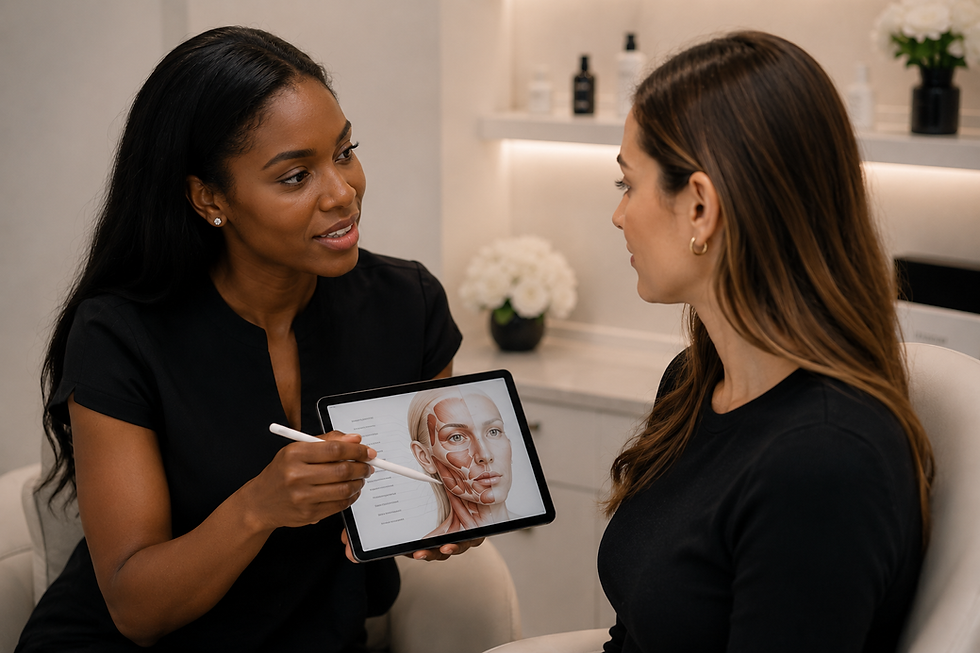
In aesthetic medicine, the consultation is often underestimated yet it is the most critical part of the entire treatment journey. Long before Botox, dermal filler or skin boosters are considered, a thorough consultation lays the foundation for safety, natural results and long-term satisfaction.
Aesthetic treatments are not one-size-fits-all. Every face is different, every ageing process is unique, and every patient brings their own anatomy, medical history and expectations. A high-quality consultation ensures treatments are appropriate, ethical and tailored, rather than rushed or generic.
This guide explains why consultations matter so much, what a good aesthetic consultation should include, and how personalised planning leads to better outcomes and safer treatments.
What Is an Aesthetic Consultation?
An aesthetic consultation is a structured medical assessment carried out by a qualified practitioner before any injectable or skin treatment.
It is not simply a discussion about “what you want done”. A proper consultation involves:
✦ Medical and lifestyle screening
✦ Facial assessment at rest and in movement
✦ Discussion of goals and expectations
✦ Education around options, risks and alternatives
✦ Creation of a personalised treatment plan
In many cases, the consultation is where the most important clinical decisions are made.
Why Consultations Are Essential for Safety
1. Medical History and Risk Screening
Every patient brings a unique medical background. A consultation allows the practitioner to identify:
✦ Previous aesthetic treatments
✦ Allergies or sensitivities
✦ Autoimmune or neurological conditions
✦ Medications that may affect safety or healing
✦ Pregnancy or breastfeeding status
Skipping this step increases the risk of complications, adverse reactions or inappropriate treatment choices.
2. Understanding Facial Anatomy and Risk Zones
Injectable treatments carry inherent risks; particularly dermal fillers. A thorough consultation includes:
✦ Assessment of vascular risk zones
✦ Review of facial asymmetry
✦ Understanding of individual anatomy
This allows the practitioner to plan injection depth, placement and product choice safely.
3. Identifying When Not to Treat
One of the strongest indicators of a good practitioner is their ability to say “no”.
Consultations help identify situations where:
✦ Treatment is not appropriate
✦ Expectations are unrealistic
✦ Another approach would be safer or more effective
✦ The patient would benefit from delaying treatment
Ethical decision-making protects both patient and practitioner.
Assessment: Looking Beyond the Area of Concern
Faces Are Dynamic, Not Isolated Areas
Patients often request treatment for a specific concern, such as lips, frown lines or under-eyes. A proper consultation looks at:
✦ The whole face
✦ Facial movement and expression
✦ Balance between upper, mid and lower face
✦ Skin quality vs structure vs muscle activity
Treating one area without understanding the whole face can lead to imbalanced or unnatural results.
Dynamic vs Static Ageing
A consultation helps determine whether concerns are:
✦ Dynamic (muscle-related, treated with Botox)
✦ Structural (volume loss, treated with filler or biostimulators)
✦ Skin-quality related (treated with boosters or regenerative injectables)
Correct diagnosis is essential for choosing the right treatment.
Why Personalised Treatment Planning Matters
1. There Is No “Standard Face”
What works beautifully for one patient may be inappropriate for another. Personalised planning considers:
✦ Facial proportions
✦ Gender-specific anatomy
✦ Age-related changes
✦ Ethnic and genetic differences
✦ Personal aesthetic preferences
This ensures results look harmonious and individual, not templated.
2. Short-Term vs Long-Term Thinking
A consultation should not focus only on today’s treatment. Good planning considers:
✦ How the face will age
✦ How treatments interact over time
✦ When to pause, adjust or change approach
✦ Avoiding over-treatment
3. Long-term planning prevents the “overfilled” or unnatural look.
Managing Expectations: A Key Role of the Consultation
Education Is Part of Safety
A major purpose of the consultation is to educate patients on:
✦ What a treatment can realistically achieve
✦ What it cannot do
✦ Expected timelines for results
✦ Longevity and maintenance requirements
Clear communication prevents disappointment and builds trust.
4. Before-and-After Reality
Consultations should include discussion of:
✦ Subtle vs dramatic results
✦ The difference between social media imagery and real-life outcomes
✦ The importance of natural movement and balance
Honest conversations create better long-term satisfaction.
Informed Consent: More Than a Signature
True informed consent means the patient understands:
✦ The proposed treatment
✦ Alternatives available
✦ Potential risks and side effects
✦ Aftercare and recovery expectations
Consent should be a conversation, not a rushed form.
Consultations and Natural-Looking Results
Natural results don’t happen by chance. They are the result of:
✦ Careful assessment
✦ Conservative planning
✦ Understanding facial dynamics
✦ Respecting individual anatomy
The consultation is where these principles are established.
Why Consultations Reduce Complications
Many aesthetic complications can be traced back to:
✦ Poor assessment
✦ Inappropriate product choice
✦ Treating the wrong concern
✦ Rushing treatment decisions
A thorough consultation significantly reduces these risks by ensuring treatment is both necessary and suitable.
Red Flags: When Consultations Are Rushed or Skipped
Be cautious if:
✦ Treatment is offered immediately without assessment
✦ Medical history is not discussed
✦ Risks are minimised or ignored
✦ Multiple treatments are pushed without explanation
✦ You feel pressured to proceed
A consultation should feel collaborative, not transactional.
Consultations for First-Time Patients
For new patients, consultations are especially important. They allow:
✦ Education about injectables
✦ Discussion of fears or concerns
✦ Gradual, conservative treatment planning
✦ Building a trusted practitioner–patient relationship
Many patients benefit from starting slowly.
Consultations for Returning Patients
Even experienced patients need regular reassessment. Faces change over time due to:
✦ Ageing
✦ Weight changes
✦ Previous treatments
✦ Lifestyle factors
Ongoing consultations ensure treatment plans evolve appropriately.
The Psychological Side of Aesthetic Consultations
Aesthetic concerns are often tied to confidence, identity and self-image. A good consultation:
✦ Explores motivation for treatment
✦ Screens for body image concerns
✦ Encourages realistic, healthy expectations
This protects patient wellbeing as well as aesthetic outcomes.
Key Takeaways
✦ Consultations are essential for safety
✦ They guide correct treatment choice
✦ They prevent over-treatment and imbalance
✦ They support long-term planning
✦ They build trust and better results
Conclusion: The Consultation Is the Treatment Before the Treatment
In aesthetic medicine, the consultation is not a formality, it is a clinical cornerstone. It protects patient safety, ensures ethical decision-making and creates the foundation for natural, balanced results.
Whether you are new to aesthetic treatments or continuing your journey, a thorough consultation ensures that every treatment decision is informed, personalised and appropriate.
The best outcomes begin long before the first injection.